Retreats in Salalah and the Dhofar hills
Oman’s far south in the monsoon months, when bare hills turn green and the air cools.
Ayn Athum, Dhofar, Oman
About Oman
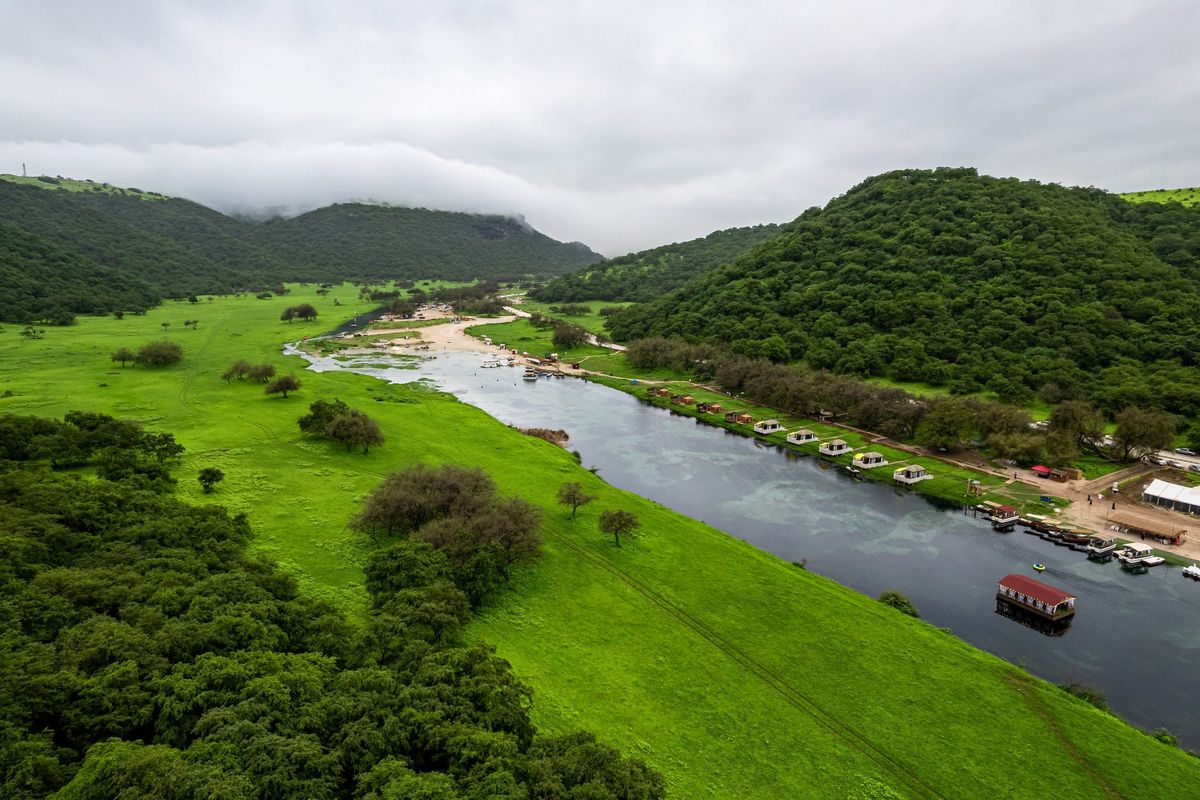
For most of the year the hills behind Salalah are brown and dry. Then the monsoon arrives in late June, and by mid-July the slopes are green.
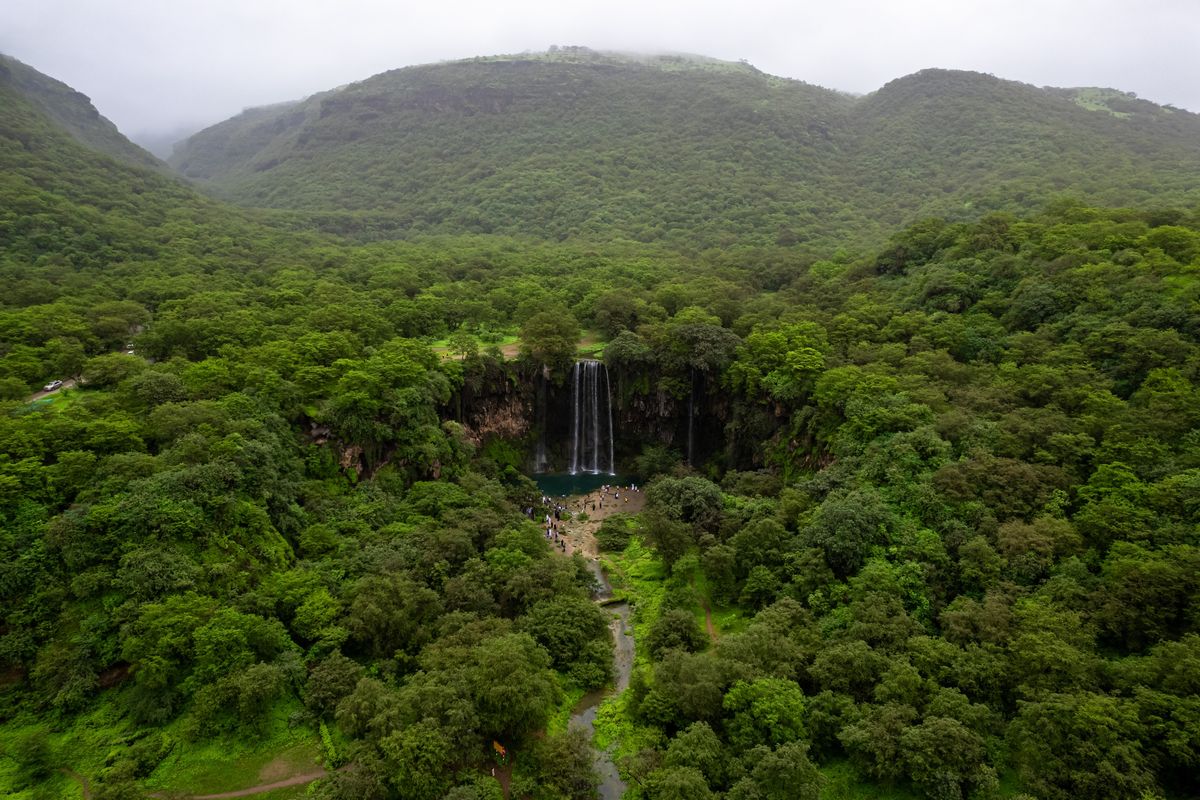
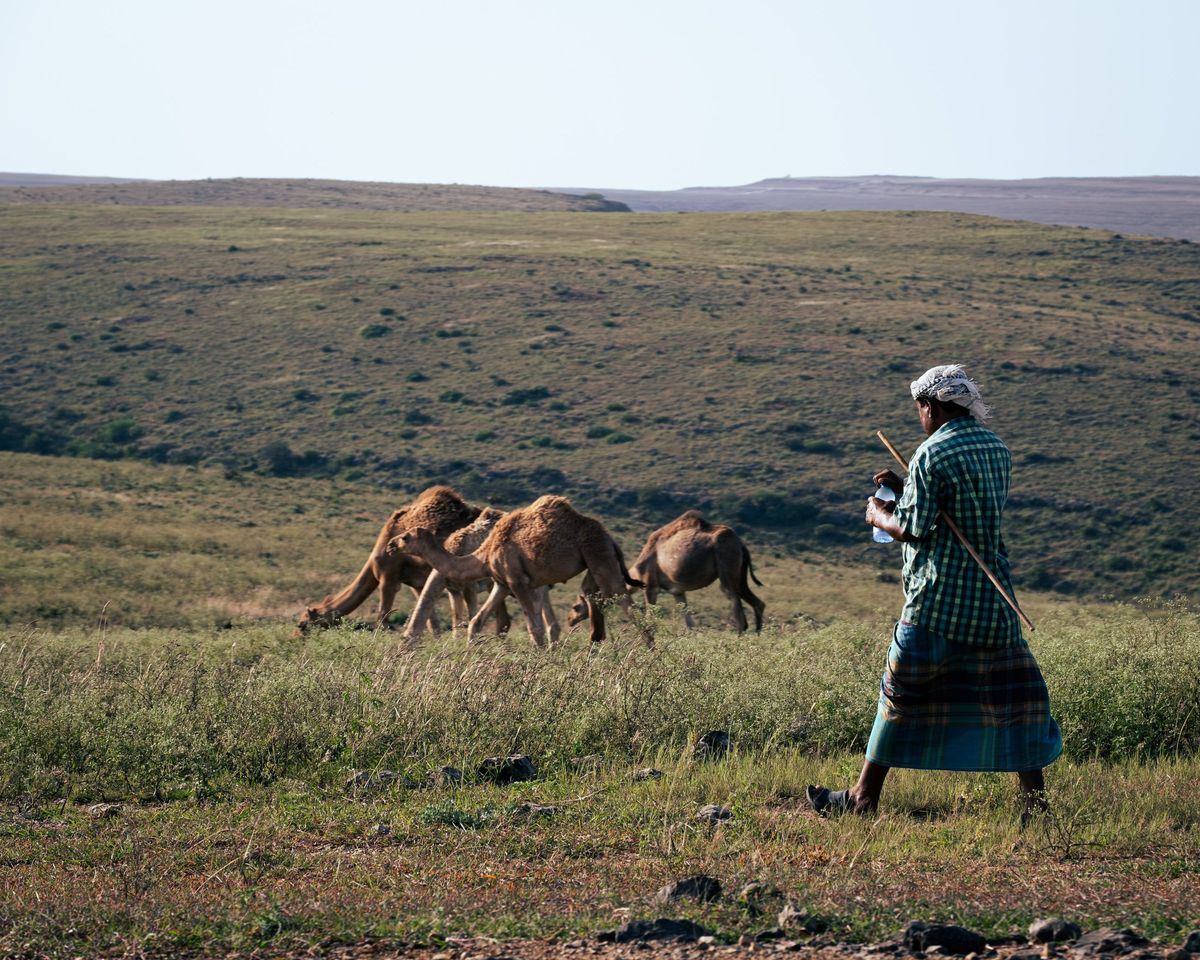
Salalah itself is a coastal town of coconut palms and banana farms. Up in the hills, camels wander onto the roads out of the fog, and waterfalls run in wadis like Darbat.
When to go and how to get there
- Go from Late June to September. That’s the khareef, when mist turns the hills green. From late September to December the hills stay green under clearer skies.
- Fly into Salalah (SLL), with direct flights from Muscat (about 1 hour 40 minutes), Dubai (about 2 hours 15 minutes) and Doha, among others. Many nationalities can visit Oman without a visa for up to 14 days. Check the rules for your passport.
What you can do here
- Wadi Darbat. A green valley with a lake and boats for hire.
- The frankincense trees of Wadi Dawkah. Thousands of frankincense trees on a dry plateau north of Salalah, part of UNESCO’s Land of Frankincense.
- Al Baleed and the Museum of the Frankincense Land. The ruins of a medieval trading port in Salalah, with a museum on the frankincense trade and Oman’s life at sea.
- Sumhuram at Khor Rori. The walls of an ancient frankincense port on a rocky spur above a cove, east of Salalah.
- The Mughsail blowholes. West of Salalah, waves force seawater up through holes in the rock and high into the air.