Retreats in the Hunza Valley
Apricot orchards and old forts under 7,000-metre peaks, high in the Karakoram.
Hunza Valley, Pakistan
About Pakistan
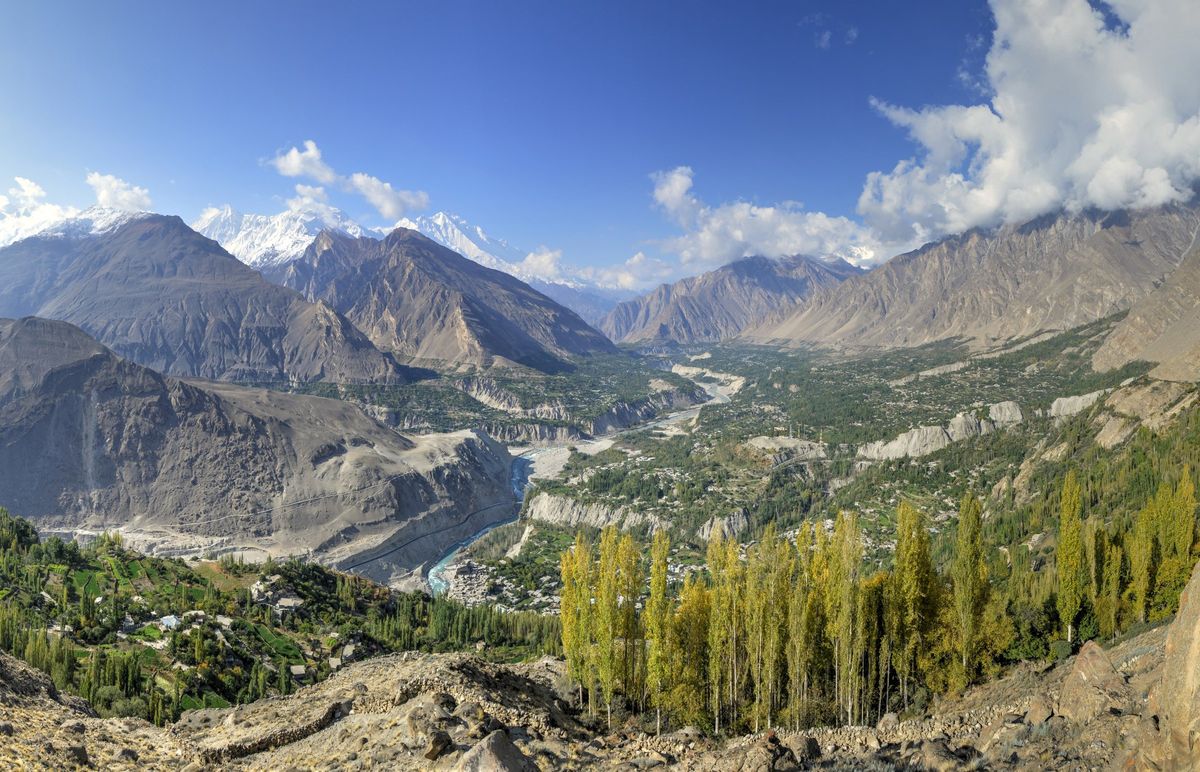
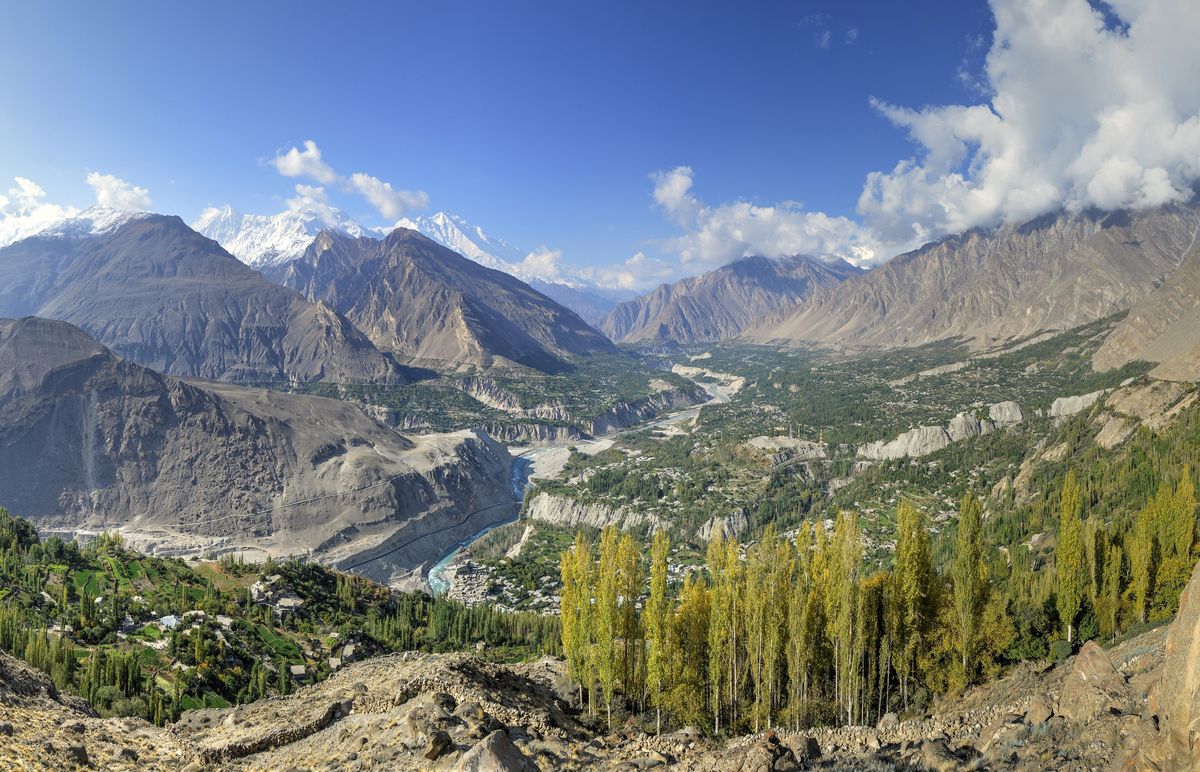
Hunza runs north from Gilgit along the Karakoram Highway towards China. The valley floor is around 2,500 metres up, and the peaks above it pass 7,000.
Its villages are green patches of watered fields and orchards against bare mountain walls. In spring the apricot trees flower. In autumn the poplars and fruit trees turn gold, orange and red.
When to go and how to get there
- Go from April, then September to October. April for apricot blossom, October for autumn colour. May to September is the main season.
- Fly into Islamabad (ISB), then on to Gilgit (GIL), about an hour on a small plane, or to Skardu (KDU). These mountain flights only go in clear weather and are often delayed. From Gilgit it’s about two and a half hours by road to Karimabad.
What you can do here
- Baltit Fort. The old home of Hunza’s rulers above Karimabad, more than 700 years old and now a museum.
- Altit Fort and its garden. The valley’s oldest fort, about 900 years old, with a café in the royal garden’s orchard.
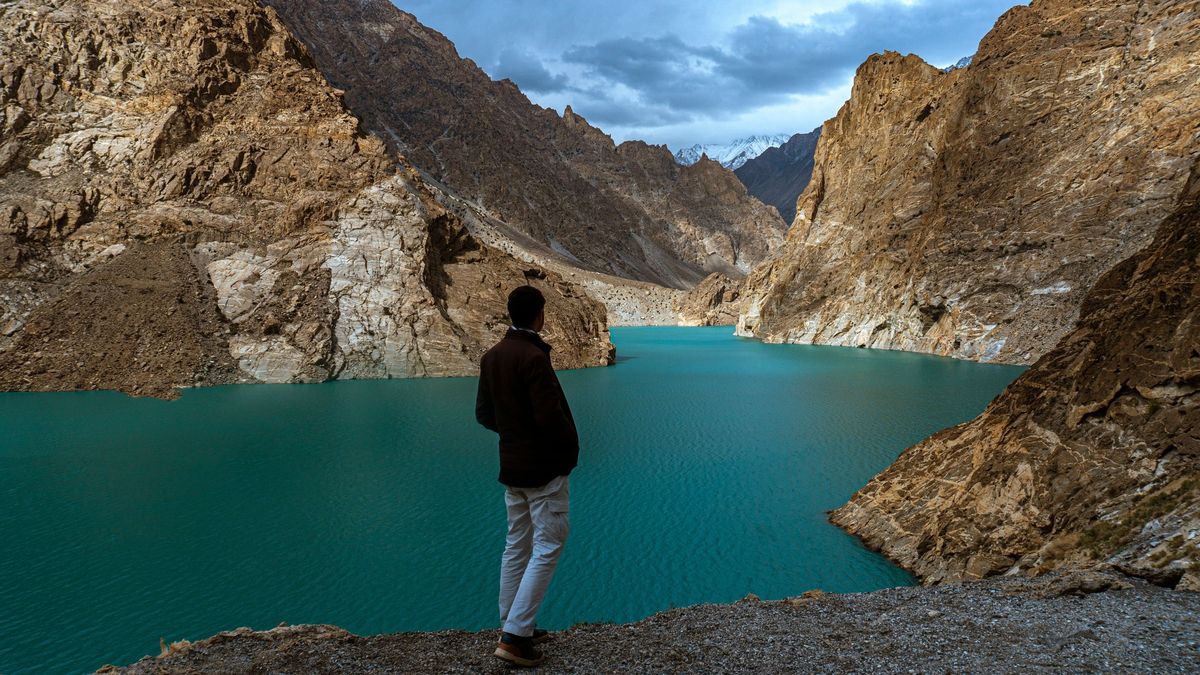
- Attabad Lake. A turquoise lake made by a landslide in 2010, about 21 km long, with boats for hire.
- The Passu Cones. The jagged peaks of Tupopdan, 6,106 metres high, above the village of Passu.
- The glaciers at Passu. Passu sits near two glaciers.