Retreats in the AlUla valley
A desert valley of sandstone cliffs, 2,000-year-old tombs and protected night skies in northwest Saudi Arabia.
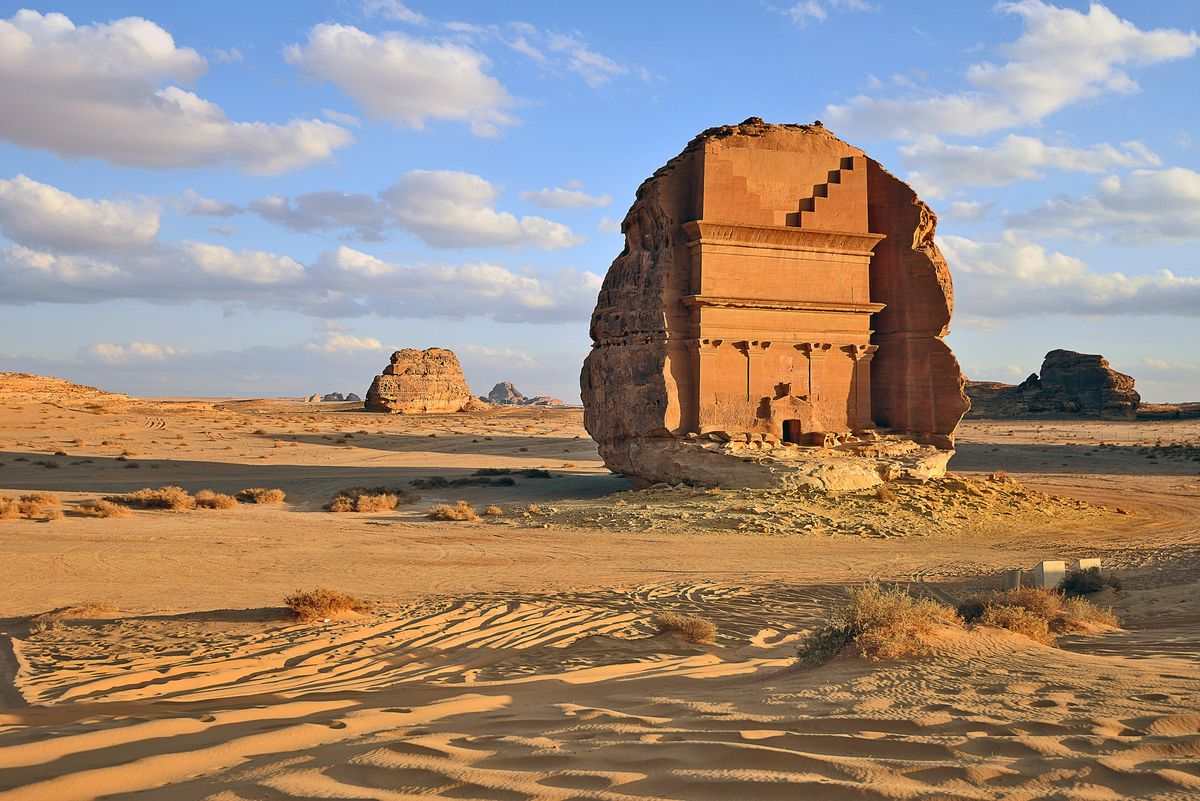
Qasr al-Farid, Hegra, AlUla, Saudi Arabia
About Saudi Arabia
AlUla lies in a long valley in northwest Saudi Arabia. Wind and sand have worn its sandstone cliffs into strange shapes.
People have lived here for thousands of years. The Dadanite and Lihyanite kingdoms left their writing on the canyon walls, and the Nabataeans carved the tombs of Hegra, Saudi Arabia’s first UNESCO World Heritage site.
When to go and how to get there
- Go from November to March.
- Fly into AlUla (ULH), about 35 km from town, with direct flights from Riyadh, Jeddah, Dubai and Doha. Many nationalities, and residents of the Gulf states, can get Saudi Arabia’s tourist eVisa online. It lasts a year and allows up to 90 days in the country.
What you can do here
- Hegra. Guided tours only, among 111 tombs the Nabataeans cut into the rock about 2,000 years ago.
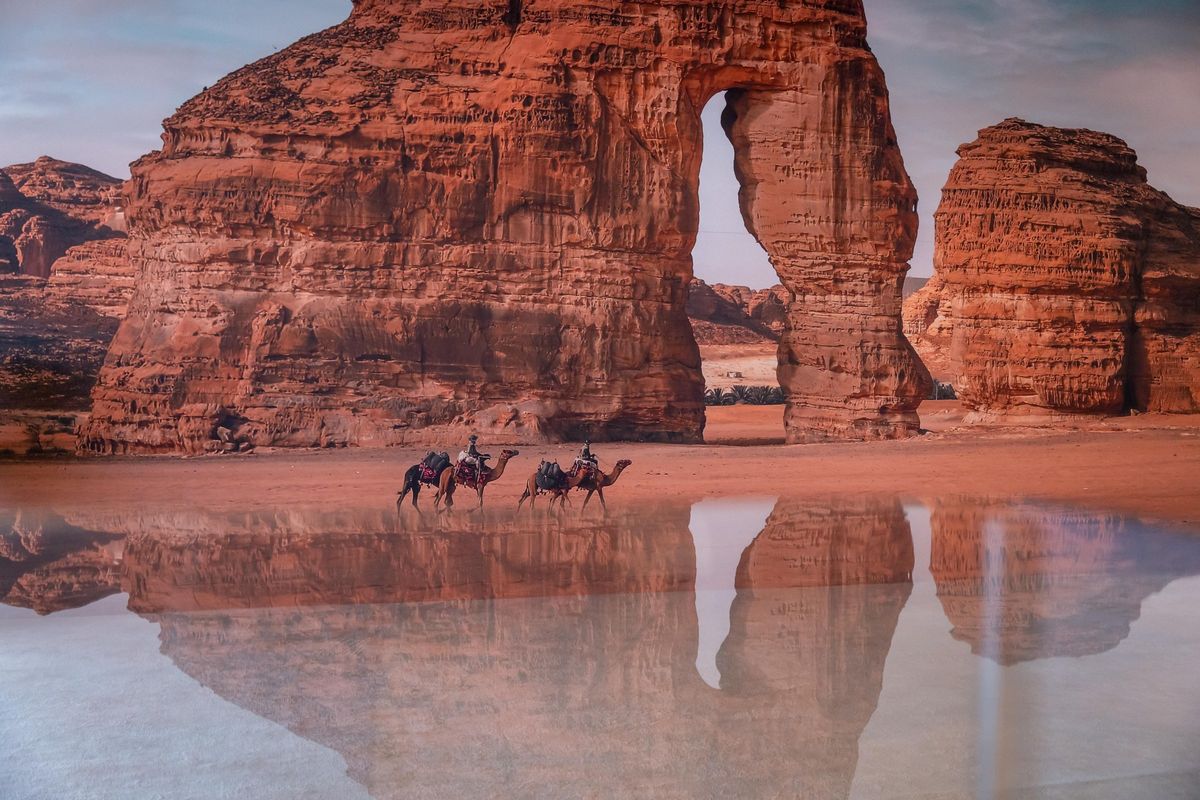
- Elephant Rock at sunset. A 52-metre sandstone rock shaped like an elephant, with fire pits for sitting out after dark.
- The old town. A maze of mud-brick houses where people lived until the early 1980s, with candlelit lanes at night.
- Dadan and Jabal Ikmah. The capital of two ancient kingdoms, and a canyon of inscriptions known as the open-air library.
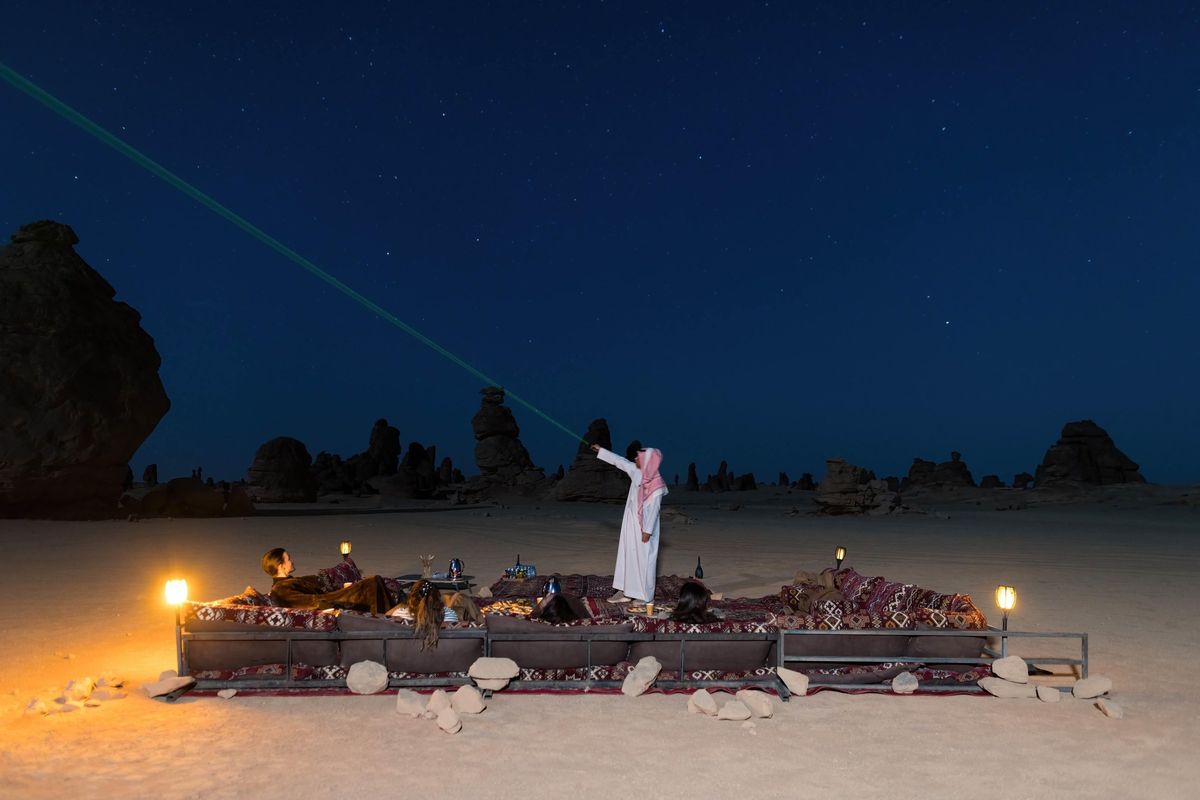
- Stargazing at Gharameel. Supper by the fire and a guided look at the sky, inside AlUla’s Dark Sky Park.